
Quick guide: Pick out and inspect the feet regularly, keep a consistent farrier schedule, provide balanced nutrition and suitable footing, and act quickly when you notice heat, a stronger digital pulse, sudden lameness, a foul smell, deep cracks or a change in hoof shape.
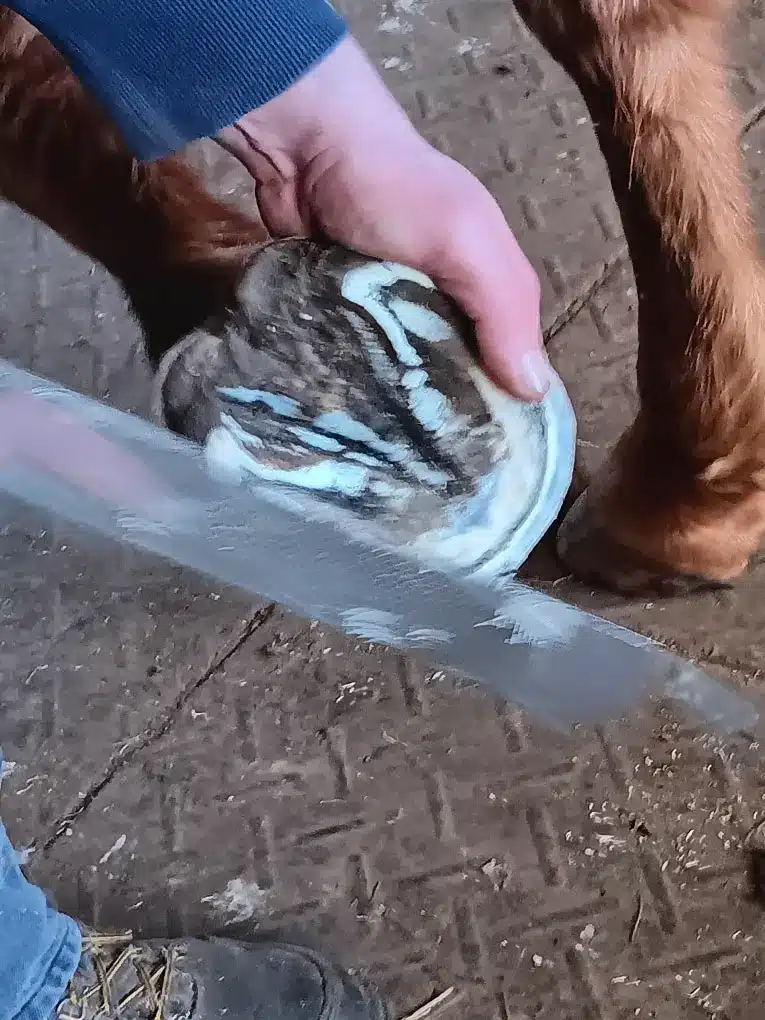
Routine hoof care supports a horse’s comfort, movement and soundness. The exact routine should be adjusted for the individual horse’s age, workload, conformation, hoof growth, environment and whether the horse is barefoot or shod.
Know the main parts of the hoof
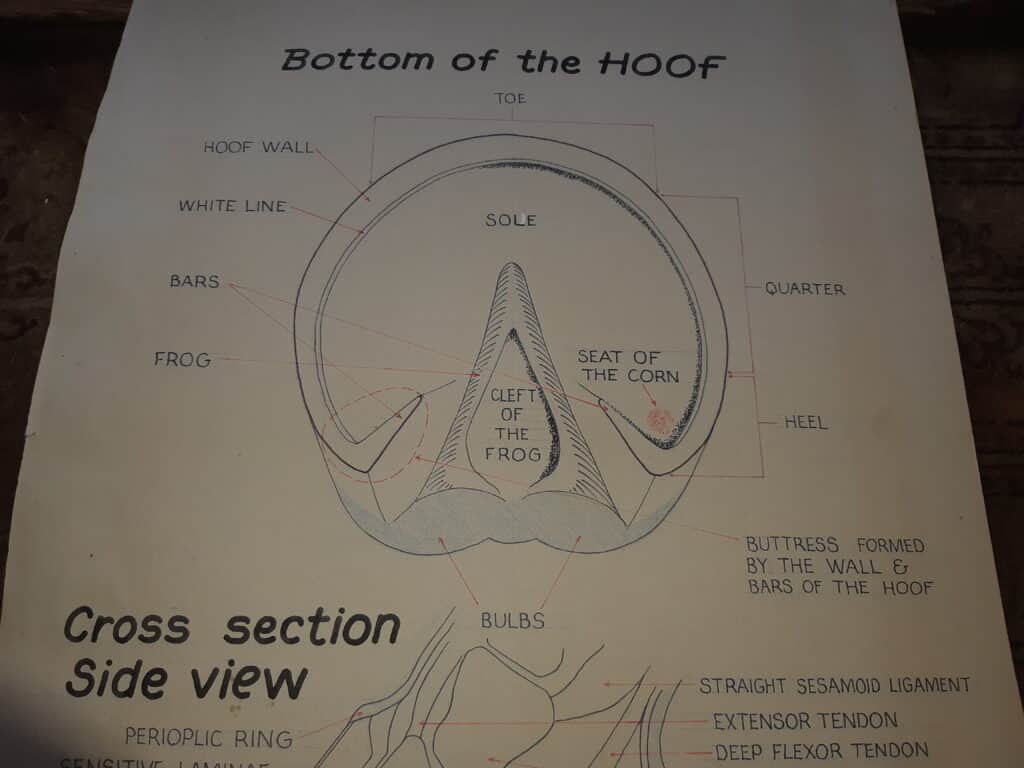
The visible hoof capsule protects sensitive structures and helps carry and distribute weight. Important structures include the hoof wall, sole, frog, bars, white line, coronary band and the laminae that help suspend the coffin bone inside the hoof capsule.
- Hoof wall: the outer horn that grows down from the coronary band.
- Sole: the horn covering much of the bottom of the foot. Healthy sole is normally concave and sheds excess material naturally.
- Frog: the flexible, triangular structure between the heels. It contributes to traction, shock absorption and normal function of the back of the foot.
- White line: the visible junction between the wall and sole. Stretching or separation can indicate a problem that needs assessment.
- Laminae: interlocking sensitive and insensitive tissues that connect the hoof wall to the structures around the coffin bone. Laminitis damages this attachment and is a veterinary emergency.
1. Clean and inspect the feet
Pick out each foot often enough to prevent packed material from hiding stones, punctures, loose shoes or damaged tissue. Many owners do this daily and before and after riding. Work from heel toward toe and avoid aggressively digging into healthy frog or sole.
While the foot is clean, look for:
- new cracks, chips or wall separation
- a loose, shifted or sprung shoe
- black discharge or a strong foul smell around the frog
- heat, swelling or an unusually strong digital pulse
- bruising, punctures or a foreign object
- uneven wear, a changing landing pattern or reluctance to lift a foot
Do not pull out a deeply embedded object. Protect the foot and contact a veterinarian so its direction and depth can be assessed.
2. Keep a consistent farrier schedule
Many horses are trimmed or reset roughly every four to eight weeks, but there is no single correct interval for every horse. Growth rate, season, wear, age, hoof quality, shoeing and therapeutic needs all affect timing. Your farrier should set the interval by looking at the horse in front of them.
A good appointment is not about forcing every foot into the same shape. The farrier assesses balance, hoof-pastern alignment, heel support, breakover, sole depth, movement and the horse’s comfort. Waiting until the wall is badly overgrown, flared or breaking away makes balanced work more difficult.
3. Support hoof growth with appropriate nutrition
Hoof horn grows slowly, so nutritional changes take time to show. Start with a balanced forage-based diet, clean water, suitable body condition and minerals matched to the whole ration. Supplements are not a substitute for correcting an unbalanced diet, disease, poor mechanics or unsuitable living conditions. Discuss persistent poor horn quality with your veterinarian, equine nutritionist and farrier before adding high-dose supplements.
4. Manage moisture, footing and cleanliness
Hooves adapt to their environment, but prolonged wet, manure-packed conditions can soften horn and encourage frog and white-line problems. Extremely dry, hard or abrasive footing can contribute to wear, chips and bruising. Aim for clean resting areas, regular manure removal, adequate drainage and gradual transitions when footing changes.
Common warning signs
- Sudden severe lameness: restrict movement and call your veterinarian.
- Possible laminitis: reluctance to move, repeated weight shifting, heat or strong digital pulses—contact a veterinarian promptly.
- Abscess signs: sudden marked lameness and a strong pulse may indicate an abscess, but fractures and other serious problems can look similar.
- Thrush or frog disease: persistent foul discharge, deep central-sulcus cracks, pain or bleeding need more than repeated topical treatment.
- Cracks or white-line separation: have the cause and stability assessed rather than relying only on oils or supplements.
Call a veterinarian urgently for a horse unable to bear weight, severe or worsening lameness, heavy bleeding, a puncture, suspected laminitis, swelling extending up the limb, fever or a rapidly worsening hoof problem.
Useful next steps
How to pick out a hoof safely · Planning a farrier schedule · Common hoof problems · Hoof anatomy
References
Merck Veterinary Manual: Foot Care of Horses · Merck Veterinary Manual: Laminitis in Horses · UC Davis: Horse Hoof Care
Reviewed by Josh Emsley
Second-generation farrier with more than 30 years of experience, serving Durham and Midwestern Ontario. Reviewed July 2026. This article provides general education and does not replace an examination by a veterinarian or farrier. Contact Josh.