Suspect laminitis? Call your veterinarian immediately. Warning signs include a strong bounding digital pulse, heat in more than one foot, repeated weight shifting, reluctance to turn, a “sawhorse” stance, or sudden foot soreness—especially after illness, grain overload, lush pasture exposure or a problem in another limb.
Laminitis is damage and inflammation affecting the laminae that suspend the coffin bone inside the hoof capsule. When that attachment weakens, the coffin bone can rotate or sink in severe cases. Early action can reduce pain and may limit structural damage.
Laminitis versus founder
Laminitis describes injury to the laminae. A horse can have an early or mild episode without visible displacement of the coffin bone.
Founder is commonly used for chronic laminitis with structural displacement, sinking or lasting hoof-capsule distortion. The terms are often mixed in everyday speech, but founder is not an inevitable outcome of every laminitis episode.
Warning signs
- A stronger-than-normal digital pulse at the back of the fetlock or pastern
- Heat in one or more feet
- Reluctance to walk, turn tightly or lift a foot
- Frequent weight shifting or lying down more than usual
- A rocked-back stance intended to unload painful front feet
- Short, careful steps that are worse on firm ground
Not every horse shows the classic rocked-back stance. Mild or recurrent endocrine-related episodes can be subtle and may first appear as footiness, widened growth rings or repeated unexplained soreness.
Major causes and risk factors
- Endocrine disease: insulin dysregulation associated with equine metabolic syndrome is a major cause; PPID can increase risk, particularly when insulin regulation is also abnormal.
- High-carbohydrate exposure: grain overload or unrestricted access to high-sugar pasture can trigger laminitis in susceptible horses.
- Severe systemic illness: colitis, retained placenta, metritis and other inflammatory or toxin-related illnesses can place the feet at risk.
- Excess weight bearing: a horse protecting a badly injured opposite limb can develop supporting-limb laminitis.
- Medications and toxins: some drugs and poisonous plants can contribute in particular circumstances; medication decisions belong with the veterinarian.
What to do while the veterinarian is coming
- Keep the horse quiet on deep, soft bedding and do not force it to walk for repeated testing.
- Prevent access to grain and unrestricted pasture unless your veterinarian gives different instructions; provide water and follow veterinary feeding advice.
- Do not give leftover anti-inflammatory medication without checking the drug and dose with the veterinarian.
- Note recent feed changes, pasture access, illness, medications and when the signs began.
- Contact your farrier after speaking with the veterinarian so foot support can be coordinated.
Diagnosis and treatment
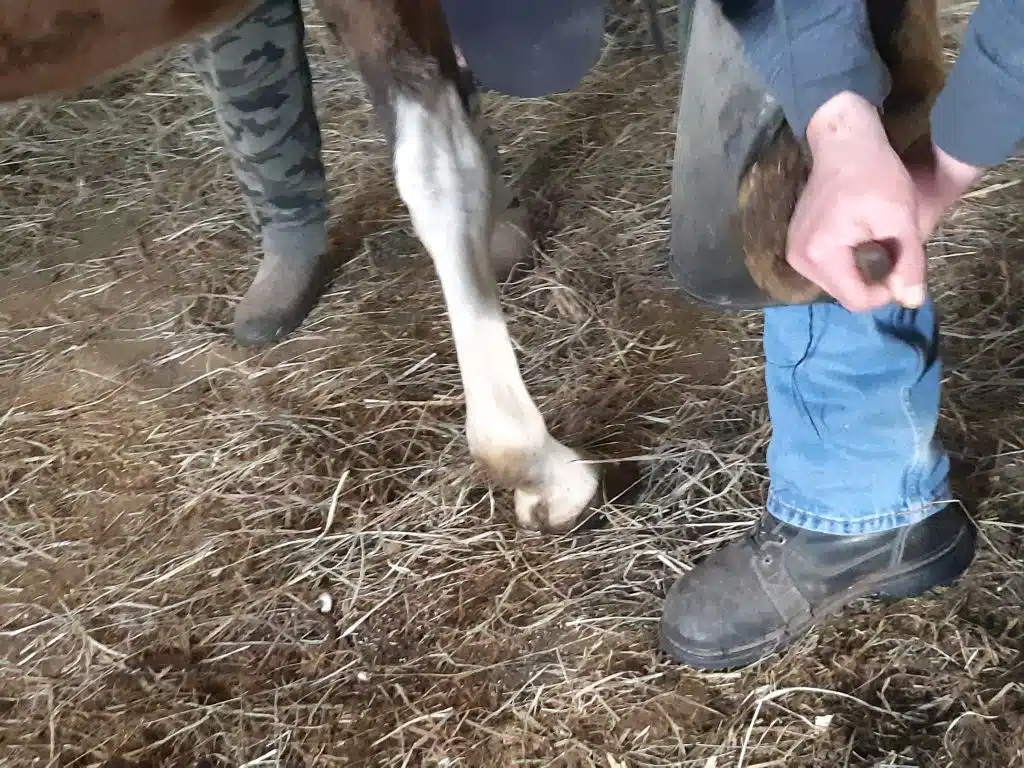
Veterinary diagnosis is based on the history, clinical signs, foot examination and, when appropriate, radiographs. Treatment targets the underlying cause, pain and inflammation while supporting the foot and limiting further laminar strain. Radiographs can help the veterinarian and farrier monitor coffin-bone position, sole depth and hoof-capsule changes.
Farriery may include temporary frog or sole support, careful realignment, reduced breakover and a longer-term trimming or shoeing plan. The correct approach depends on the phase of disease, radiographs, sole depth, pain and the individual foot. Aggressive trimming or forcing a painful foot into an ideal shape can make matters worse.
Long-term management
Recovery varies widely. Some horses return to full use after a mild episode, while severe rotation or sinking can cause permanent pain and structural change. Long-term prevention may involve body-condition management, controlled pasture access, forage testing, treatment of insulin dysregulation or PPID, and close monitoring of hoof growth.
Practical farrier note: In laminitis cases, current radiographs and clear veterinary goals are extremely valuable. The trim or shoe should be chosen for the horse in front of us and reassessed as comfort and hoof growth change.
Related reading: Hoof nutrition · Trimming and shoeing schedules · Hoof bruising
Veterinary reference: Merck Veterinary Manual: Laminitis in Horses.
Reviewed by Josh Emsley
Second-generation farrier serving Durham and Midwestern Ontario. Reviewed July 2026. This page provides general hoof-care information and does not replace an in-person veterinary diagnosis. View farrier services or contact Josh.