
Horse hoof thrush is a microbial infection and breakdown of frog tissue, usually found in the grooves beside or through the centre of the frog. Mild cases may begin with odour and dark discharge. Deeper cases can expose sensitive tissue, cause bleeding and make the horse sore.
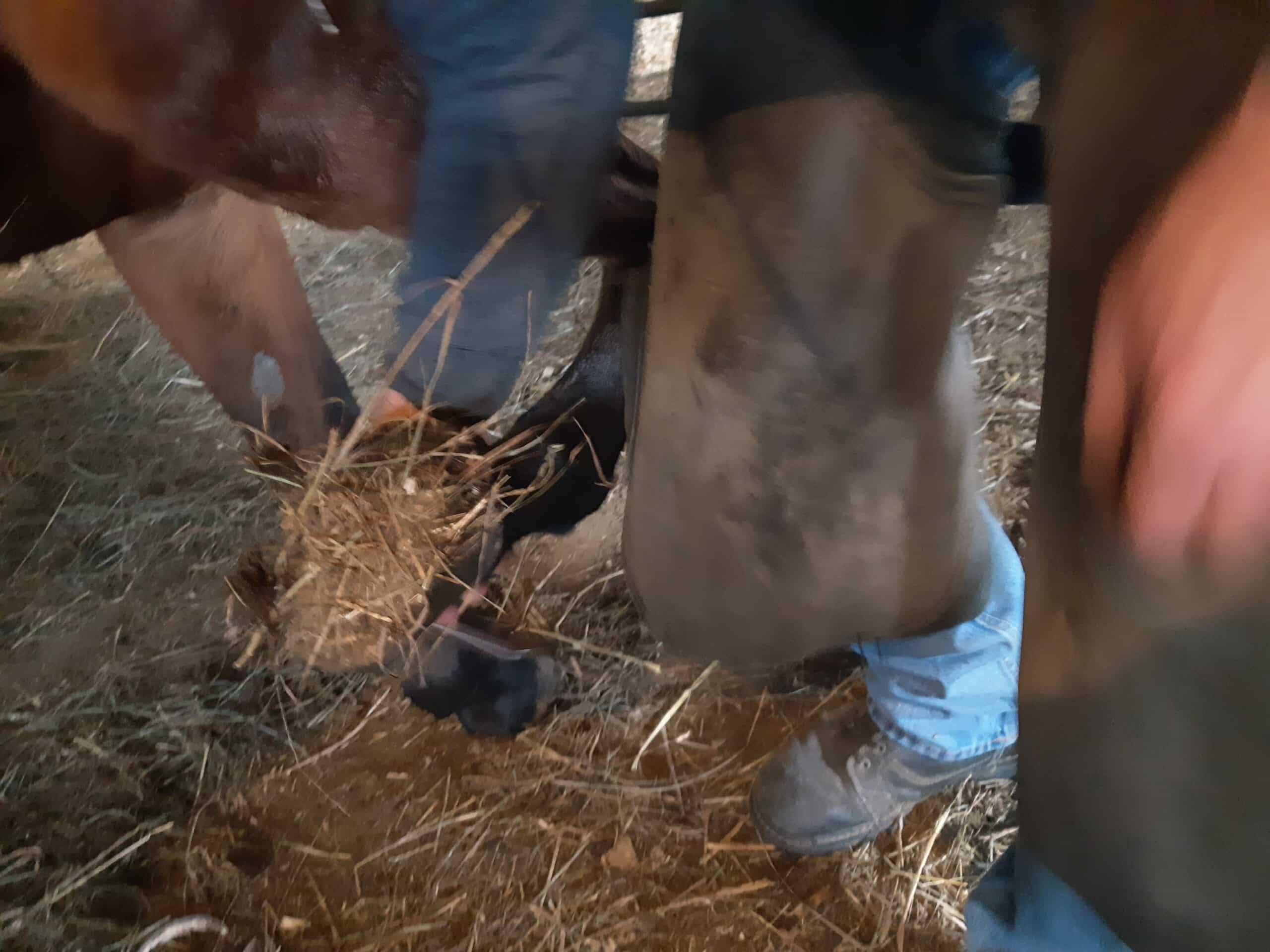
Common signs of thrush
- A strong foul smell that returns after the foot is cleaned
- Black or dark, greasy discharge around the frog
- Soft, ragged or undermined frog tissue
- A deep central sulcus that traps manure and mud
- Tenderness, flinching or lameness when the affected area is cleaned
Not every dark area of frog is thrush, and a healthy frog can shed loose material. Persistent odour, discharge, deep fissures and pain are more useful warning signs than colour alone.
Why thrush develops
Wet, manure-packed footing creates a favourable environment, but moisture is not the whole story. Deep or contracted frog grooves, poor heel function, limited movement, overgrown feet and repeated packing of debris can make the infection difficult to clear even in a reasonably clean barn.
Practical steps for owners
- Pick the feet daily. Remove packed mud and manure without aggressively gouging sensitive tissue.
- Improve the environment. Provide a dry standing area, clean bedding and better drainage where possible.
- Keep the trimming schedule current. Your farrier can remove loose, diseased material where appropriate and improve access for cleaning.
- Use treatment carefully. Ask your farrier or veterinarian which product and frequency suit the depth and condition of the frog. Strong chemicals can damage healthy tissue when overused.
When professional help matters
A mild, superficial case may improve with cleaning, dry footing and appropriate topical care. Deep central-sulcus infections, bleeding, marked tenderness, swelling, heat or lameness should be assessed. The professional may need to remove loose tissue, check heel conformation, rule out deeper infection and set a treatment plan.
Call your veterinarian promptly if the horse is lame, swelling extends above the hoof, sensitive tissue is exposed, or the infection appears deep. Thrush should not be assumed to be the only cause of a painful foot.
Practical farrier note: Recurring thrush often means the frog is not receiving enough healthy ground contact or debris keeps being trapped in a deep sulcus. Treating the surface without addressing trim, movement and environment commonly leads to another flare-up.
Related reading: Hoof picking guide · White line disease · Basic hoof care
Further reading: University of Minnesota Extension: Caring for Your Horse’s Hooves.
Reviewed by Josh Emsley
Second-generation farrier serving Durham and Midwestern Ontario. Reviewed July 2026. This page provides general hoof-care information and does not replace an in-person veterinary diagnosis. View farrier services or contact Josh.