
White line disease is a progressive separation and breakdown within the inner hoof wall. It often begins without obvious lameness, which is why farriers frequently find it during routine trimming or shoe removal. The damaged wall may sound hollow and contain dry, crumbly or powdery material.
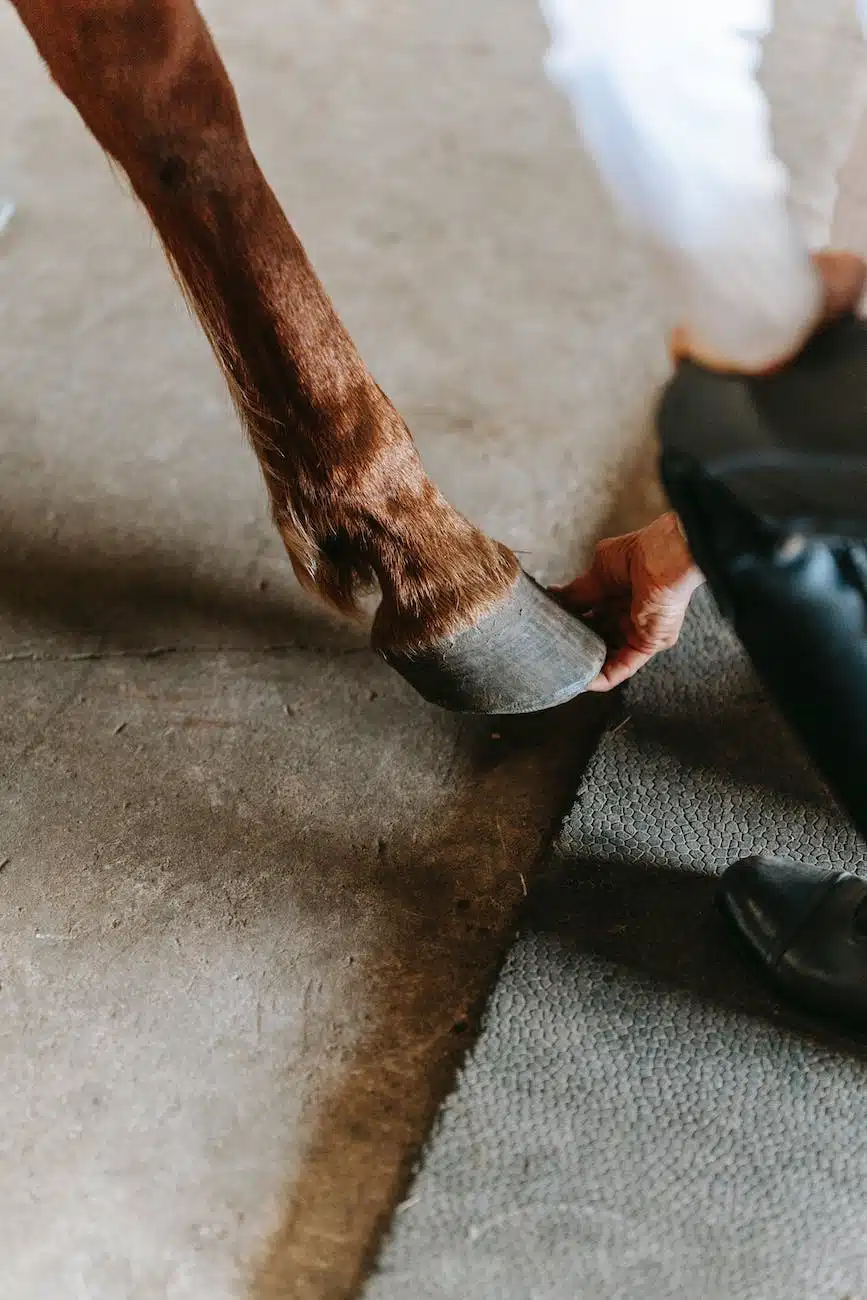
What white line disease affects
Despite the name, the condition is mainly within the non-pigmented inner hoof wall rather than the visible white line itself. Bacteria and fungi can colonize horn after separation develops, but mechanical stress, wall flares, cracks, moisture changes and poor-quality horn may help create the opening.
Signs owners and farriers may notice
- A widened or irregular white-line area at the ground surface
- Dry, chalky, crumbly or dark material under the hoof wall
- A hollow sound when the outer wall is tapped
- Separation that tracks upward farther than it first appears
- A wall crack, flare, shoe that will not stay tight, or a change in hoof shape
- Lameness in advanced cases, particularly if support of the coffin bone is affected
Diagnosis
The foot must be cleaned and the loose material explored carefully to determine how far the separation extends. Radiographs can help assess the amount of wall involved, coffin-bone position, gas pockets and whether laminitis or another structural problem is present.
Treatment
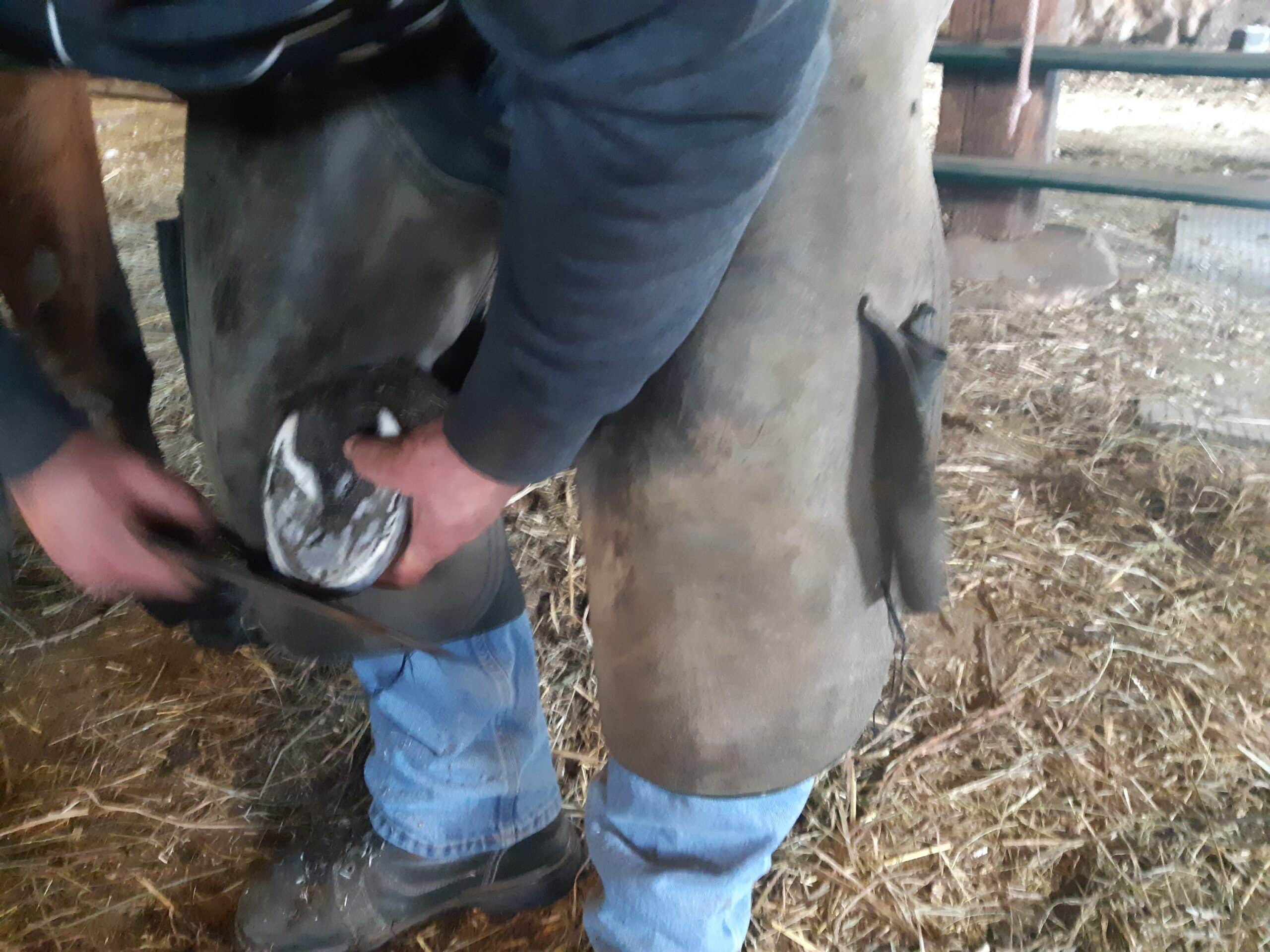
The central principle is to remove undermined, non-supportive hoof wall until firm attachment is reached and the affected area is exposed to air. The amount removed can range from a small local opening to a major wall resection. Large resections may require a shoe, plate, cast or other support so the remaining hoof capsule carries load safely.
Topical products may be used after debridement, but no liquid can penetrate and cure a large pocket that remains sealed under detached wall. The farrier and veterinarian should choose the treatment based on the depth, moisture level and tissues exposed.
Do not pack or patch over crumbly, undermined wall. Sealing contaminated material inside can allow the separation to continue unseen.
Prevention and follow-up
- Keep trimming or shoeing intervals regular enough to control flare and leverage.
- Pick out the feet and watch for a widening white line or a hollow wall.
- Provide a reasonably dry standing area while avoiding extreme wet-to-dry cycling where possible.
- Address repeated cracks, laminitis, hoof-capsule distortion and loose shoes early.
- Recheck the resection as new wall grows down; complete replacement takes many months.
Practical farrier note: White line disease is a mechanical problem as well as a microbial one. Removing damaged wall is only part of the job—the foot also needs balance and support so the new wall is not pulled apart as it grows.
Related reading: Cracks, splits and chips · Hoof abscesses · Hoof balance and shoeing
Veterinary reference: Merck Veterinary Manual: White Line Disease in Horses.
Reviewed by Josh Emsley
Second-generation farrier serving Durham and Midwestern Ontario. Reviewed July 2026. This page provides general hoof-care information and does not replace an in-person veterinary diagnosis. View farrier services or contact Josh.