
Treating thrush successfully takes more than applying a strong liquid to the frog. The infection improves when the foot is cleaned without damaging healthy tissue, the environment becomes less favourable to microbes, loose diseased horn is managed properly and the horse regains healthier frog function.
Step 1: Clean the foot gently
Pick out manure, mud, stones and packed bedding every day. Work carefully around the central and collateral grooves of the frog. A small brush can help remove loose surface debris, but do not force a hoof pick deep into a painful fissure or scrub until the frog bleeds.
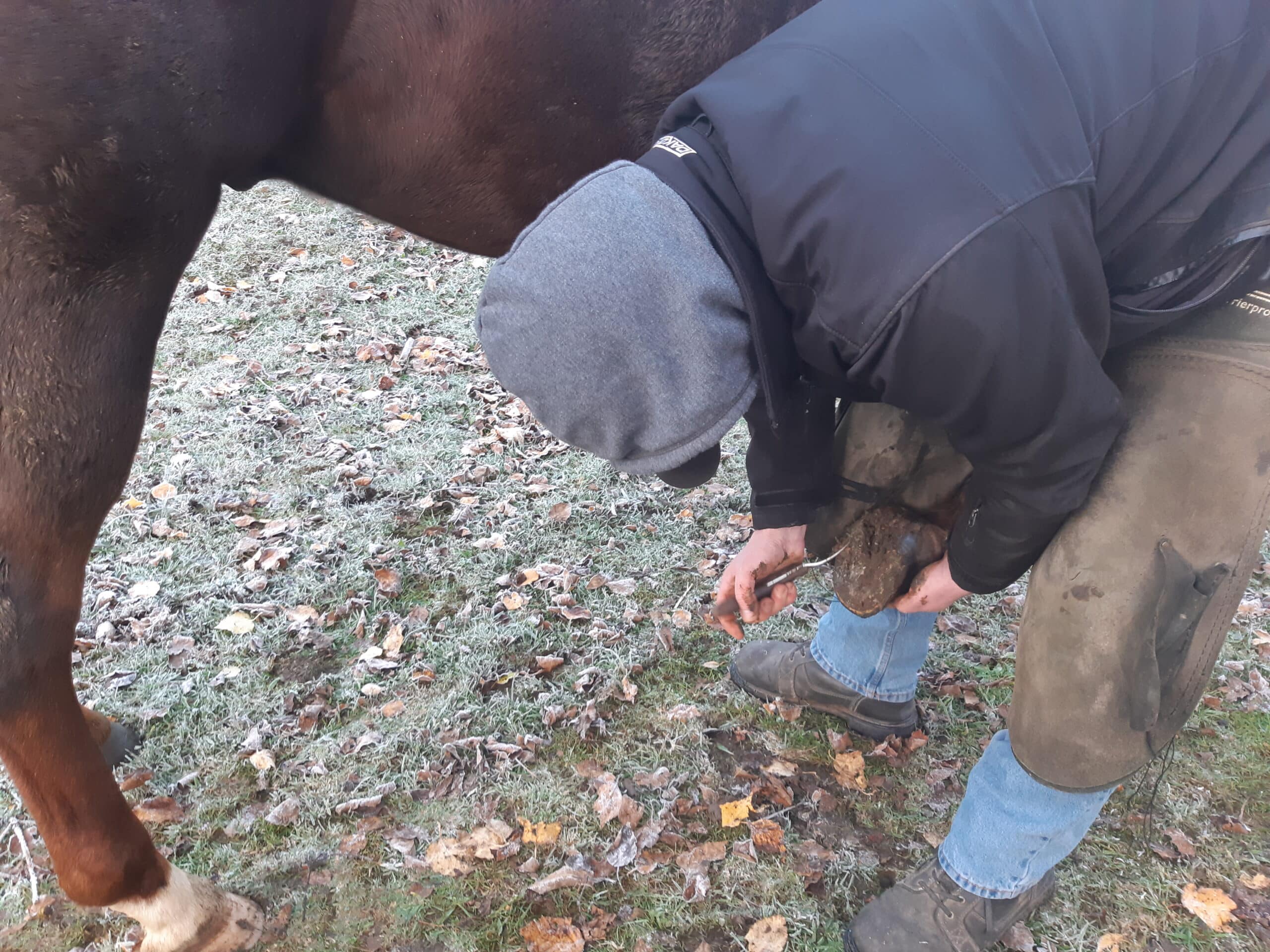
Step 2: Have the frog assessed
Your farrier can determine whether loose, ragged or undermined frog tissue should be removed so air and treatment can reach the affected area. Deep central-sulcus thrush, exposed sensitive tissue, bleeding or lameness may require veterinary involvement.
Step 3: Improve the environment
- Remove wet bedding and manure from stalls each day.
- Provide a dry standing area even when paddocks are muddy.
- Improve drainage around gates, waterers and feeding areas where horses stand repeatedly.
- Encourage suitable movement and turnout when the horse is comfortable.
- Keep the trimming schedule current so deep, debris-trapping grooves can be addressed.
Step 4: Choose a treatment carefully
Commercial thrush products vary from mild drying powders to strong antiseptic liquids. The best choice depends on whether the tissue is dry, wet, superficial, deep or already sensitive. Ask your farrier or veterinarian what to use, how often to apply it and when to stop.
More chemical is not always better. Strong copper, iodine or caustic products can damage healthy frog tissue when used too often or packed against sensitive structures. Avoid unproven homemade mixtures in deep or painful cases.
Step 5: Monitor the response
- Odour and dark discharge should decrease.
- The frog should become firmer without becoming excessively dry or brittle.
- The central sulcus should gradually become shallower as healthier tissue grows.
- The horse should be comfortable when the area is cleaned.
- If there is no clear improvement, the diagnosis and treatment plan should be reassessed.
Preventing thrush from returning
Keep picking the feet after the obvious smell is gone, maintain clean footing and avoid letting the heels and frog become overgrown. Recurring infection often points to a deep sulcus, contracted heels, limited frog contact, chronic wetness or another hoof-balance issue that topical treatment alone cannot correct.
Call your veterinarian for lameness, swelling, heat, bleeding, exposed sensitive tissue, infection extending above the hoof, or a case that is worsening despite appropriate care.
Practical farrier note: A healthy frog is meant to share load and flex with the foot. The long-term goal is not simply to sterilize the frog—it is to restore an environment and hoof shape in which healthy tissue can keep growing.
Related reading: Hoof thrush: signs and prevention · Hoof picking guide · Seasonal hoof conditions
Further reading: University of Minnesota Extension: Caring for Your Horse’s Hooves.
Reviewed by Josh Emsley
Second-generation farrier serving Durham and Midwestern Ontario. Reviewed July 2026. This page provides general hoof-care information and does not replace an in-person veterinary diagnosis. View farrier services or contact Josh.